Understanding void bet due to player injury
A void bet represents one of the most confusing scenarios for Indian bettors, especially when player injuries are involved. Simply put, a void bet is a wager that gets cancelled and your stake is returned as if the bet never happened. However, when it comes to player injuries, the rules aren’t always straightforward and can vary significantly between different sportsbooks and betting markets.
Understanding void bet policies becomes crucial for Indian bettors who often engage with offshore platforms that follow global standards similar to major operators like FanDuel and DraftKings. These policies directly impact popular sports in India, from cricket matches where a star batsman might get injured mid-innings, to football games where a key player goes down early. The confusion typically stems from the difference between true voids, bonus bet refunds, and promotional insurance offers that many bettors mistake for automatic void protections.
What Is a Void Bet When a Player Gets Injured?
A void bet occurs when a sportsbook cancels a wager and returns your original stake, treating the bet as if it never existed. When player injuries trigger void decisions, the outcome depends heavily on each sportsbook’s house rules and the specific circumstances surrounding the injury. Most importantly, the timing of when a player becomes inactive or gets injured plays a decisive role in whether your bet gets voided or settled normally.
The key distinction lies between stake returns and bonus refunds, particularly for bettors in India using offshore platforms. A true void returns your cash stake immediately, while promotional “injury insurance” might only provide bonus bet credits with wagering requirements. Additionally, many sportsbooks have strict policies about mid-game injuries, where bets often stand even if a player gets hurt during the contest.
House rules serve as the ultimate authority in void decisions, and these can vary dramatically between platforms. Some books automatically void all player prop bets if the player doesn’t start, while others require minimum playing time before considering any voids. Understanding these nuances before placing bets can save Indian bettors from unexpected losses when their favorite cricket or football stars face injury concerns.
Void vs Refund vs Bonus Bet Credit
| Outcome type | What happens to your stake | How it shows in bet history | Real-money impact |
|---|---|---|---|
| True void | Cash returned immediately to account balance | Marked as “Void” or “Cancelled” | Full cash refund, can withdraw or bet again |
| Bonus bet refund | Promotional credits issued instead of cash | Shows as “Settled” with bonus credit | Must be wagered, cannot withdraw bonus amount |
| Cash credit refund | Account credited but may have restrictions | Appears as account adjustment | Real money but might need 1x playthrough |
| No void (settled as loss) | Stake lost permanently | Marked as “Loss” or “Settled” | Complete loss of original stake |
Why Player Injuries Are Treated Differently
Sportsbooks face significant risks when offering player-specific markets, as injuries can occur at any moment and potentially void thousands of bets simultaneously. This exposure leads to conservative policies where books often favor settling bets as action rather than voiding them, particularly once games have begun. The subjective nature of injury severity and recovery timelines makes it difficult to create universal void rules that satisfy both bettors and sportsbook risk management.
Different sports present unique challenges for injury void policies. In cricket, a batsman might retire hurt but return later in the innings, creating ambiguity about whether early-game prop bets should void. Football substitutions due to tactical decisions versus injuries add another layer of complexity. These sport-specific scenarios require detailed house rules that many Indian bettors overlook when placing their wagers.
The financial implications extend beyond individual bets, as player injuries can impact parlay legs and same-game parlays differently. Some sportsbooks void entire parlays if one leg involves an injured player, while others reduce the parlay size and adjust odds accordingly. Understanding these nuanced policies helps Indian bettors make more informed decisions when building multi-leg wagers involving player props.
When Do Sportsbooks Actually Void Bets for Player Injuries?
| Scenario | Typical settlement | Reasoning | Notes for Indian bettors |
|---|---|---|---|
| Player declared inactive before game starts | Bet voided, stake returned | No opportunity for player to perform | Universal rule across most India-facing books |
| Player injured in first few minutes | Usually voided if under threshold | Insufficient playing time for fair settlement | Check minimum minutes/overs requirements |
| Player injured mid-game after threshold | Bet stands, settled on performance | Adequate playing time for evaluation | Common in cricket after 2-3 overs bowled |
| Player substituted for tactical reasons | Bet stands, no void | Not injury-related removal | Applies to football and basketball betting |
| Match abandoned due to weather | Varies by completion percentage | Different from individual injury | Important for monsoon-affected cricket |
| Player returns after injury break | Bet continues, settled on final stats | Player completed participation | Common with cricket retirement hurt scenarios |
The scenarios above represent the most common injury-related situations that Indian bettors encounter, particularly in cricket and football markets. Global sportsbooks typically apply these standards consistently, making them reliable guidelines for bettors using offshore platforms that serve the Indian market.
Pre-game inactive declarations offer the clearest void scenarios, as most reputable sportsbooks automatically cancel player prop bets when the player is confirmed out before kickoff or first ball. However, the complexity increases dramatically once games begin, with each sport having different thresholds for minimum participation.
Pre‑Game Inactives vs In‑Game Injuries
Universal void rules apply when players are declared inactive before games start, with nearly all sportsbooks automatically cancelling related prop bets and returning stakes. This represents the most straightforward scenario for Indian bettors, as there’s no ambiguity about the player’s inability to perform. Whether it’s a cricket batsman ruled out due to illness or a football striker missing due to injury, pre-game inactives consistently result in voided bets across platforms.
In-game injuries create significantly more variance in void policies, with most sportsbooks establishing minimum playing time thresholds before considering any voids. These thresholds vary by sport – typically 5-10 minutes for football, 1-2 overs for cricket bowlers, or specific possession counts for basketball. Once players exceed these minimums, their bets usually stand regardless of subsequent injuries.
The rationale behind these different treatments centers on fairness and betting action. Pre-game inactives provide no opportunity for performance evaluation, making voids the most equitable solution. However, in-game injuries after meaningful participation allow for partial performance assessment, leading sportsbooks to settle bets based on actual statistics accumulated before the injury occurred.
How Major Sportsbooks Handle Player Injury & Void Bets
| Sportsbook policy (genericised) | Program name / feature | Injury timing covered | Refund type | Parlay / SGP treatment |
|---|---|---|---|---|
| Early exit protection | Player Safety Net | First quarter/period only | Bonus bet credit | Single legs only, SGP excluded |
| Fair play guarantee | Fair Play Promise | First 10 minutes of play | Cash refund up to limit | Reduces parlay to remaining legs |
| Injury insurance promo | Bet Protect Plus | Any time during game | Site credit with rollover | Whole parlay refunded as bonus |
| Standard house rules | Default Policy | Pre-game inactive only | Full cash void | Individual legs voided cleanly |
| Goodwill gestures | Customer Care Review | Case-by-case basis | Varies by situation | Depends on customer history |
These policies reflect common patterns found across major international sportsbooks, many of which influence the rules applied by platforms serving Indian bettors. The variety in approaches highlights why reading specific house rules becomes essential before placing any player-focused wagers.
Promotional injury insurance programs often catch Indian bettors off-guard because they assume automatic cash refunds, when in reality most offer bonus bet credits with wagering requirements. Understanding these distinctions helps set proper expectations and avoid disappointment when injury situations arise.
Key Themes Across Different House Rules
- Pre-game inactive declarations consistently void bets across all platforms, representing the most reliable protection for Indian bettors
- Minimum playing time thresholds vary by sport but typically range from 2-10 minutes, with cricket often using overs bowled or balls faced as benchmarks
- Promotional injury insurance rarely covers same-game parlays or multi-leg wagers, focusing mainly on straight player prop bets
- Cash refunds are generally limited to pre-game scenarios, while in-game injury protections usually provide bonus credits or site credit
- Goodwill refunds depend heavily on customer relationship and betting history, making them unreliable for regular protection strategies
What This Means If You Bet From India on Offshore Apps
Indian bettors using offshore platforms typically encounter house rules adapted from major international sportsbooks, meaning the policies described above apply directly to their betting experience. Most India-facing books borrow extensively from established operators’ rule sets, particularly regarding player prop void policies and injury protections.
The key difference lies in customer service application and goodwill gestures, where offshore books serving Indian markets may be more or less generous depending on their business model and competitive positioning. Some platforms emphasize customer retention through liberal void interpretations, while others stick strictly to written policies to maintain profitability.
Reading the ‘House Rules’ or ‘Terms and Conditions’ sections becomes particularly crucial for Indian users, as these documents outline specific void triggers and refund processes. Many platforms bury important details about injury-related settlements in subsections dedicated to individual sports, making thorough review essential before engaging with player prop markets.
Player Injury Rules in Different Bet Types
- Straight player props receive the most generous void treatment, with many books automatically cancelling these bets for pre-game inactives and early-game injuries
- Team total and game outcome bets rarely void for individual player injuries, as teams can still compete effectively despite missing key players
- Same-game parlays typically exclude injury insurance benefits, with entire tickets often lost if one player-dependent leg fails due to injury
- Season-long props and futures maintain strict no-void policies, as injury risk is considered inherent to long-term player performance markets
- Live betting markets continue operating during injury delays, but may suspend temporarily while sportsbooks assess the impact on odds
- Parlay legs involving injured players usually void individually, reducing the parlay size and recalculating odds for remaining selections
- Player vs player matchup props follow similar rules to straight props, but both players must remain active for the bet to have action
Straight Player Props vs Parlays and SGPs
Individual player proposition bets receive the most favorable void treatment when injuries occur, as sportsbooks recognize the direct relationship between player availability and bet viability. These single-selection wagers typically qualify for automatic voids when players are declared inactive pre-game, and many platforms extend early-injury protections through promotional programs.
Parlays and same-game parlays face significantly more restrictive void policies, with many injury insurance programs explicitly excluding multi-leg wagers from coverage. When one parlay leg involves an injured player, the typical outcome involves voiding just that selection while allowing remaining legs to continue, though this reduces potential payouts proportionally. Same-game parlays often receive less favorable treatment due to their correlated nature and higher profit margins for sportsbooks.
Timing Matters: Before the Game, Early Exit, Late Injury
| Timing of injury / status | Example (cricket/NBA/football) | Common settlement outcome | Is bet usually void in India‑facing books? |
|---|---|---|---|
| Pre-game inactive (confirmed before start) | Kohli ruled out 2 hours before toss | Automatic void, stake returned | Yes, universal policy |
| Early injury (under threshold) | NBA player exits after 3 minutes played | Often voided or bonus refund available | Depends on book’s promotional policies |
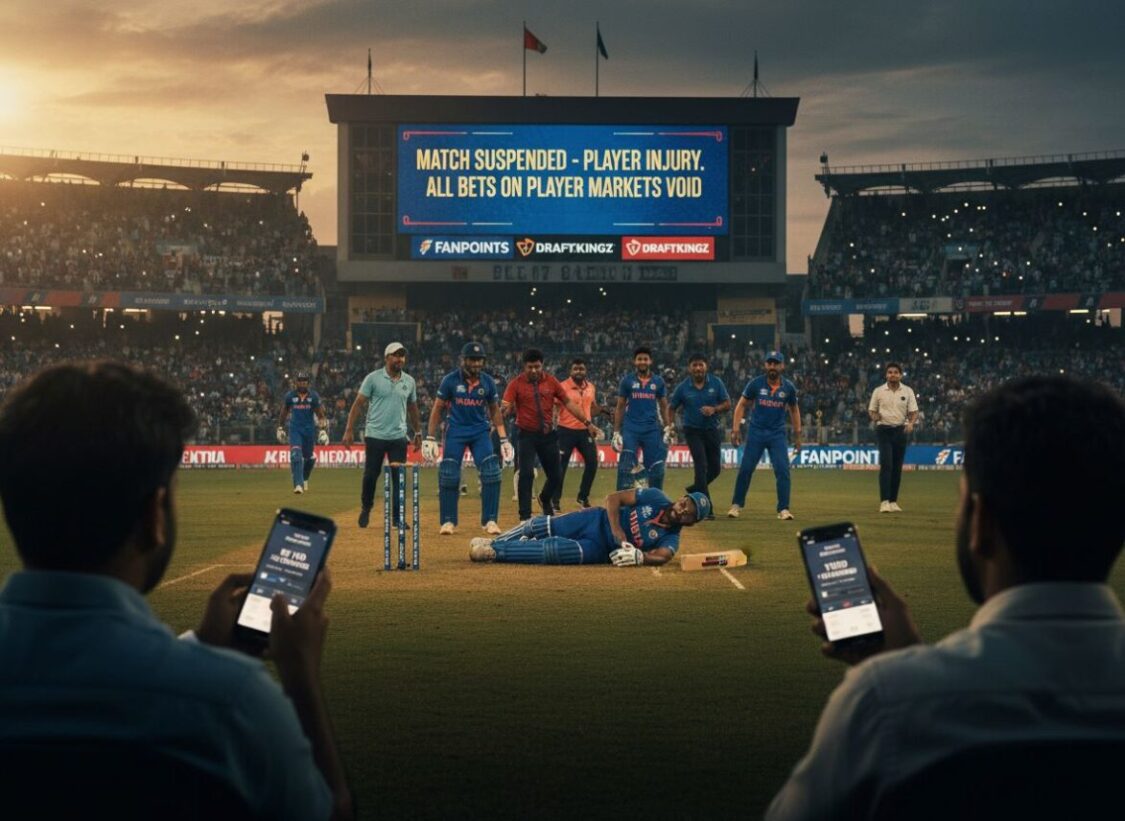
| Mid-game injury (after threshold) | Fast bowler injured after 4 overs bowled | Bet stands, settled on performance to that point | No, bet has action |
| Late injury (significant participation) | Football striker injured in 75th minute | Normal settlement based on full statistics | No, substantial playing time completed |
| Retirement hurt with return | Batsman retires hurt, returns later | Bet continues, final stats used for settlement | No, participation resumed |
The timing examples above demonstrate how Indian bettors can expect their wagers to be handled across different injury scenarios. Cricket-specific situations like retirement hurt offer unique complexities not found in other sports, requiring careful attention to individual sportsbook policies.
Understanding these timing distinctions helps Indian bettors set appropriate expectations and make more informed decisions about when to place player props. The universal nature of pre-game inactive voids provides reliable protection, while in-game scenarios require more careful risk assessment.
Why Books Use Playing Time Thresholds
Sportsbooks implement minimum playing time requirements to balance fairness with business viability, recognizing that some participation allows for meaningful performance evaluation. These thresholds prevent abuse scenarios where bettors might seek voids for players performing poorly before injuries occur, while also acknowledging that extremely brief appearances don’t provide adequate assessment opportunities.
The specific threshold levels vary by sport based on typical game flow and scoring patterns. Basketball uses minutes played, cricket employs balls bowled or faced, and football relies on completed passes or possession time. These sport-specific metrics ensure that void decisions align with meaningful participation levels rather than arbitrary time periods.
Indian bettors benefit from understanding these thresholds because they can assess injury risk more accurately when placing bets. A cricket fast bowler with a recent injury concern presents higher void risk for over/under wickets props than a batsman with similar concerns, due to the physical demands of bowling versus batting.
Impact on Live Bets and Cash Out
Live betting markets typically continue operating during injury situations, though sportsbooks may temporarily suspend wagering while assessing the impact on game flow and odds. Player-specific live props usually close immediately when injuries occur, preventing additional action on markets that may no longer have meaning.
Cash out functionality remains largely unaffected by player injuries for most bet types, with pre-injury cash out values still available during temporary market suspensions. However, player prop cash out values may drop to zero immediately upon injury confirmation, as the bet’s underlying premise becomes invalid.
Indian bettors using live betting strategies should monitor injury news closely, as the window for favorable cash out decisions can close rapidly once injury information becomes public. The delay between injury occurrence and odds adjustment creates brief opportunities for informed cash out decisions.
Sport‑Specific Examples for Indian Bettors
Cricket presents unique void challenges due to its format variations and retirement hurt rules, where players can leave and return to the field during the same match. A batsman retiring hurt in the 15th over might return for the final overs, creating ambiguity about whether betting markets should remain active or void entirely. Most sportsbooks treat these scenarios as temporary suspensions rather than permanent player removals.
Football injury voids depend heavily on substitution timing and whether the removal appears tactical or injury-related. A striker substituted in the 20th minute due to obvious injury typically qualifies for early exit protection programs, while a 70th-minute substitution during a tactical change rarely triggers void considerations. Understanding these distinctions helps Indian football bettors assess their void protection options.
NBA betting from India involves navigating rest days and load management alongside traditional injury concerns. While obvious mid-game injuries may qualify for void consideration, pre-planned rest days for veteran players typically result in normal bet settlement. The distinction between injury and rest becomes crucial for understanding when void protection applies.
Cricket, Football and NBA Injury Scenarios
- Cricket fast bowler develops bowling action injury after delivering 2.3 overs – bet usually voids due to insufficient bowling participation, with most books requiring 3+ overs for action
- Football midfielder receives red card in 15th minute after apparent injury contact – bet stands as action, since card issuance represents completed participation regardless of injury involvement
- NBA star exits game after 8 minutes with ankle injury but no early exit promotion available – bet settles normally based on statistics accumulated during brief appearance
- Cricket batsman retires hurt on 45 runs, returns later to finish on 78 not out – bet settles using final completed statistics of 78, treating retirement as temporary interruption
- Football goalkeeper injured during warm-ups, replaced before kickoff – automatic void applies universally since player never gained opportunity to accumulate relevant statistics
- NBA player listed as probable, plays 2 minutes then exits with re-aggravated injury – settlement depends on specific sportsbook’s minimum minutes threshold and promotional policies
Void Bet vs Early Exit Insurance, Fair Play and Similar Offers
- True void bets return your original cash stake immediately with no restrictions, while promotional injury insurance typically provides bonus bet credits that must be wagered
- Early exit insurance programs often exclude same-game parlays and limit coverage to specific sports or time periods during games
- Fair play policies usually apply only to first quarter or early-game scenarios, not injuries occurring later in contests
- Promotional refunds may come with maximum stake limits, covering only bets up to $25 or $50 regardless of your actual wager amount
- Bonus bet refunds typically expire within 7-14 days and cannot be withdrawn as cash, requiring successful wagering to convert to real money
- Standard house rules provide more reliable protection than promotional programs, which can be modified or discontinued at any time
- Some platforms combine multiple approaches, offering immediate small cash refunds plus larger bonus credits for qualifying injury scenarios
How Bonus Bet Refunds Differ From True Voids
Bonus bet refunds require additional wagering to convert into withdrawable cash, effectively giving bettors another chance to risk their money rather than returning their original stake. These promotional credits often come with odds restrictions, requiring bets on selections with minimum odds of -200 or better, limiting the types of wagers Indian bettors can place.
True voids provide immediate access to returned stakes, allowing bettors to withdraw funds or use them for any type of bet without restrictions. The cash appears in account balances instantly and carries the same flexibility as a fresh deposit, making it significantly more valuable than promotional alternatives.
Indian bettors should carefully distinguish between these two outcomes when evaluating injury protection programs, as bonus bet refunds provide less value despite appearing generous in promotional marketing materials.
Reading the Small Print on Injury Insurance Promos
Promotional injury insurance often excludes major sports popular in India, with some programs covering only American football and basketball while ignoring cricket and football entirely. Geographic restrictions may also apply, though most offshore books serving Indian customers design their programs to include all active users regardless of location.
Stake limits frequently cap injury insurance benefits at modest amounts, typically $25-50 maximum refunds even for much larger original wagers. Time restrictions may limit coverage to first quarter or first half scenarios, excluding late-game injuries that could still significantly impact bet outcomes.
Eligibility requirements often demand opt-in procedures or specific bet types, with some programs requiring pre-registration for each individual wager. Understanding these limitations prevents disappointment when injury situations arise and expected refunds don’t materialize as anticipated.
House Rules to Check Before You Bet From India
Locating house rules on offshore platforms requires checking multiple sections, as injury-related policies often appear in sport-specific subsections rather than general terms and conditions. Most platforms include these details under “Baseball Rules,” “Basketball Rules,” or “Cricket Rules” headings, requiring individual review for each sport you plan to bet on regularly.
Understanding house rules becomes particularly important for Indian bettors because different platforms serving the same market can have vastly different approaches to injury voids. Some books automatically void all player props for inactive players, while others require specific participation thresholds or offer no injury protection beyond promotional programs.
The language used in house rules can be technical and difficult to interpret, often requiring careful reading to understand practical applications. Terms like “action,” “no action,” and “dead heat” carry specific meanings that directly impact how injury-related bets settle, making familiarity with these terms essential for informed betting decisions.
Key Clauses About Inactive or Removed Players
- Look for phrases like “player must be active at game time” or “all bets void if player does not start” to identify pre-game inactive protections
- Search for minimum playing time requirements such as “player must complete one full inning” or “minimum 5 minutes played for action”
- Identify parlay-specific language like “void legs reduce parlay size” or “entire parlay voided if any player inactive” to understand multi-bet impacts
- Find promotional program details under sections labeled “Bet Insurance,” “Early Exit,” or “Fair Play” rather than general house rules
- Check for sport-specific variations, as cricket rules often differ significantly from football or basketball policies on the same platform
- Note any geographic restrictions or eligibility requirements that might affect Indian bettors’ access to injury protection benefits
Practical Tips to Protect Yourself Against Injury‑Related Losses
- Monitor injury reports and lineup confirmations up until game time, using reliable sources like official team announcements and established sports news platforms
- Avoid betting on players with recent injury concerns or those listed as questionable on official injury reports, particularly for prop bets requiring full game participation
- Read platform-specific house rules for each sport before placing any player-dependent wagers, noting minimum participation thresholds and void triggers
- Limit same-game parlays and multi-leg bets involving multiple players from the same team, as injury risk multiplies with each additional player selection
- Take advantage of early exit insurance programs when available, but understand the bonus bet limitations and wagering requirements involved
- Consider live betting alternatives for injury-prone players, waiting until confirmed lineup and early-game health before committing to prop bets
- Diversify player prop bets across multiple games and teams rather than concentrating on individual high-profile players who attract more betting attention
Using Injury News and Lineups Before You Place Bets
Reliable injury information for Indian bettors comes from official team sources, established sports journalists, and verified social media accounts rather than unofficial forums or tip services. For cricket, the Board of Control for Cricket in India (BCCI) and official IPL channels provide authoritative updates, while Premier League and La Liga official sites offer definitive football injury news.
Timing your bet placement around official lineup releases reduces injury void risk significantly, as teams typically confirm starting lineups 60-90 minutes before cricket matches and 75-90 minutes before football kickoffs. This information allows final verification of player availability before committing to prop wagers.
Using multiple information sources helps identify discrepancies or late-breaking developments that might not appear immediately across all platforms. Cross-referencing team announcements with beat reporter updates and official league communications provides the most complete picture of player availability.
Structuring Parlays to Reduce Injury Exposure
Building parlays with a mix of team-based and player-based selections reduces injury risk compared to all-player prop combinations, as team totals and game outcomes typically continue even when key players get injured. This approach maintains upside potential while limiting the impact of individual player unavailability.
Avoiding same-team player combinations in parlays prevents multiple leg failures from single injury situations, where one team’s injury crisis could void several parlay selections simultaneously. Spreading player props across different games and teams creates independent risk factors rather than correlated exposure.
Consider using player props with lower participation requirements, such as “to score” bets rather than statistical accumulation props that require full game participation. These binary outcomes often settle quickly and face less injury-related void risk than props requiring sustained performance throughout entire contests.
Summary: How to Read and Use Void Bet Rules for Player Injuries in India
| Key takeaway | Why it matters | Action point for Indian bettors |
|---|---|---|
| Pre-game inactives universally void bets | Most reliable protection against injury losses | Wait for official lineups before betting on injury-prone players |
| House rules vary significantly between platforms | Void policies directly impact betting outcomes | Read sport-specific rules before placing player props |
| Bonus refunds differ from true voids | Affects real money value and withdrawal options | Understand promotional terms before relying on injury insurance |
| Parlays face more restrictive void policies | Multiplies injury risk across multiple selections | Limit player dependency in multi-leg wagers |
| Playing time thresholds determine bet action | Early injuries may void while late injuries stand | Learn minimum participation requirements for your sports |
These key takeaways provide Indian bettors with a practical framework for navigating injury-related void situations across different platforms and sports. Understanding these principles helps set appropriate expectations and develop more effective betting strategies that account for injury risk factors specific to Indian markets and popular sports.
Final Checklist Before Betting on Player Props
- Verify the specific platform’s house rules for your chosen sport, noting minimum playing time requirements and pre-game inactive policies
- Check official team injury reports and lineup confirmations from reliable sources within 2 hours of game time
- Confirm whether any promotional injury insurance applies to your intended wager, understanding bonus versus cash refund terms
- Assess the player’s recent injury history and current health status using multiple information sources
- Consider the timing of your bet placement relative to official lineup releases and team announcements
- Evaluate parlay structure to minimize injury exposure across multiple player-dependent selections